Organic Psyllium Husk Powder, 500g

Regular price € 29,90

BUY 3 GET 1 FOR FREE! (Add 4 to your cart)

Free Shipping
in Spain & Portugal
EU Shipping €6.90
Free from €59
Secure Payment
Safe & secure checkout

Organic Farming

Certified Organic

Vegan icon - Elliotti

Vegan

Gluten free icon - Elliotti

Gluten-free

A simple way to bring more fibre into your everyday diet, and one of the most useful natural ingredients for gluten-free baking.

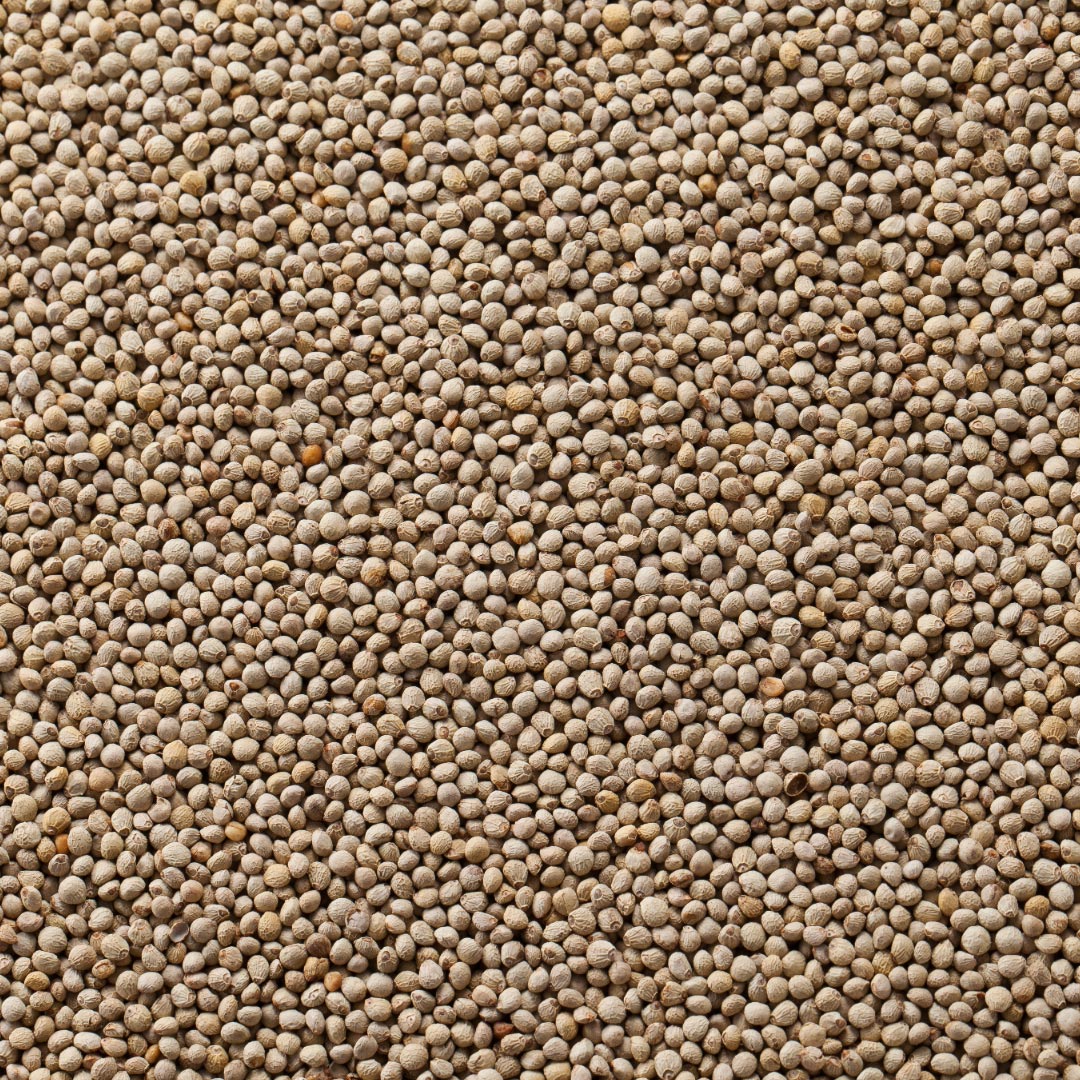
Organic blond psyllium powder is made from the finely ground husks of Plantago ovata seeds. These tiny seed coverings are naturally rich in soluble fibre and especially valued for their high content of mucilage, which has an impressive ability to absorb water and form a soft, gel-like consistency.

This is what makes psyllium so versatile. A small amount can be mixed into yoghurt, porridge, smoothies and other foods to increase their fibre content, while in the kitchen it becomes an exceptionally useful ingredient for breads, rolls, pancakes and other baked recipes.

If you bake gluten-free, psyllium is particularly worth knowing. When mixed with water, the powder develops a binding quality that helps hold ingredients together, retain moisture and give dough more structure. The result can be softer, more cohesive bread and baked goods that are easier to work with.

Because this psyllium is finely ground rather than left as whole husks, it disperses easily and gives a smoother texture in food and baking. It has a neutral flavour, so it can be used in both sweet and savoury recipes without competing with the other ingredients.

Made from 99% pure organic blond psyllium husks grown in India, with no unnecessary additives. Simply use 2 teaspoons (10 g) per day mixed into food or your favourite recipes.

For anyone looking to eat more fibre or discover a genuinely useful ingredient for gluten-free cooking, this is one of those uncomplicated pantry staples that can quickly earn a permanent place in the kitchen.

More information

Botanical name: Plantago ovata
Plant family: Plantaginaceae
Plant part used: Seed husk
Origin: India

🌿When stools are hard

One of the most practical reasons people use psyllium is when stools tend to be hard, dry or difficult to pass.

When enough fluid is consumed alongside psyllium, the fibre absorbs water and increases the water content of the stool. This can make hard, dry stools softer and easier to pass, which is one of the reasons psyllium is commonly chosen when bowel movements have become hard or irregular.

Psyllium is particularly interesting because it does not simply act by making stools looser. Its water-binding fibre can also help give more consistency to loose stools by absorbing excess water. In this way, psyllium can help regulate stool consistency in either direction.

Adequate fluid intake is essential when consuming psyllium, as the fibre needs water to swell properly.

🌿Soluble Fibre and the Gut

Unlike insoluble fibres that largely pass through the digestive system unchanged, much of psyllium's fibre is soluble and gel-forming.

This means that rather than simply adding rough bulk, psyllium holds water within the intestinal contents and creates a softer, more hydrated mass. This distinctive behaviour is what has made psyllium one of the best-known dietary fibres for supporting normal bowel function and regularity.

🌿Exceptionally High in Fibre

Psyllium is naturally exceptionally high in fibre. This powder contains 86.5 g of fibre per 100 g, with a daily 10 g serving providing 8.6 g of fibre. This makes it a simple and concentrated way to add a substantial amount of fibre to your everyday diet.

🌿A Remarkable Ability to Absorb Water

One of the most distinctive characteristics of psyllium is its ability to absorb water and swell. This powder has a swelling capacity of 60 ml per gram, so even a small amount can take up a considerable volume of liquid.

As the psyllium hydrates, it develops its characteristic soft, gel-like consistency. This is also why psyllium should always be consumed with plenty of liquid and should not be swallowed as a dry powder.

Usage tips

Take 2 teaspoons (10 g) per day, mixed into sweet or savoury foods.
Psyllium absorbs a considerable amount of liquid, so always consume it with adequate water. It can be mixed into yoghurt, porridge or smoothies, or incorporated into bread, pancakes and other baked recipes.

Certification

- Certified Organic Product
- Certified Organic Agriculture (AB certified)
- Origin of raw materials: India
- Country of manufacture: India

Composition

100% Organic Psyllium Husk Powder from Organic Farming – Plantago Ovata

A little history

Psyllium has been valued for centuries, but its story stretches across several species of the Plantago genus. The blond psyllium used today comes from Plantago ovata, a plant particularly associated with India, Iran and neighbouring regions.

The name psyllium comes from the Greek psylla, meaning “flea”, a reference to the tiny size and appearance of the seeds. In India, Plantago ovata is better known as isabgol or ispaghula, names that remain closely associated with the plant today.

Psyllium has a long place in traditional botanical practice. Historical sources record the use of Plantago seeds in different medical traditions, while Plantago ovata and ispaghula became especially established in Ayurvedic and Unani traditions of the Indian subcontinent. Their ability to swell dramatically in water made the seeds and their husks particularly distinctive botanical materials.

Knowledge of psyllium gradually travelled beyond its traditional growing regions, and by the 19th and 20th centuries psyllium preparations had become increasingly familiar in European and North American pharmacy and nutrition. Modern interest eventually shifted strongly towards the fibre-rich outer husk, the part of the seed with the extraordinary capacity to absorb water and form mucilage.

Today, psyllium has moved far beyond its traditional botanical origins. It is now used internationally as a concentrated source of dietary fibre and, more recently, has become a favourite ingredient in gluten-free and high-fibre cooking.

From a tiny seed known for centuries in traditional plant practice to a staple of the modern pantry, psyllium is a lovely example of an old botanical ingredient finding an entirely new place in contemporary food culture.

Precautions for use

Leave 2 hours between consumption and taking medication. People with stomach or intestinal problems or who have had surgery should refrain from consuming psyllium.
Does not replace medical treatment.
Consult a doctor if you are taking medical treatment.

Packaging & storage

Store in a dry place away from UV rays.

FAQ

🌿 What is the difference between psyllium powder and whole psyllium husks?
They come from the same part of Plantago ovata, but this product has been finely ground into a powder. The finer texture makes it easier to distribute evenly through yoghurt, smoothies, porridge and recipes, and particularly useful when you want a smooth, consistent result in baking.

🌿 How much fibre does one daily serving provide?
A 10 g serving provides 8.6 g of fibre. The powder itself contains an impressive 86.5 g of fibre per 100 g, making psyllium an exceptionally concentrated source of dietary fibre.

🌿 Is psyllium high in sugar or fat?
No. Despite its very high fibre content, this psyllium contains only 0.5 g sugars and 0.8 g fat per 100 g.

🌿 Is this psyllium gluten-free?
The current batch analysis measured gluten at less than 5 mg/kg, well below the 20 mg/kg threshold used in the EU for foods labelled gluten-free. The technical specification also lists no gluten-containing cereals as ingredients or expected cross-contaminants.

🌿 Why does psyllium become so thick when mixed with water?
Psyllium has an unusually high capacity to absorb liquid. This powder has a measured swelling volume of 60 ml per gram. Once hydrated, it expands and develops its characteristic gel-like consistency. This is why a little psyllium goes a surprisingly long way and why it should always be taken with plenty of liquid.

🌿 Can I take psyllium at the same time as medication?
No. Leave at least 2 hours between taking psyllium and any medication, as stated in the product instructions.

🌿 Does this psyllium contain any additives?
The product is organic psyllium powder from Plantago ovata, with a stated purity of 99% and origin in India. No additional functional ingredients are listed.

🌿 Is the psyllium tested for contaminants?
Yes. The current batch has been analysed for pesticide residues, glyphosate, ethylene oxide, mycotoxins, heavy metals and microbiological contaminants. The certificate reports, among other results, no detected Salmonella or Listeria monocytogenes and pesticide residues below the stated analytical reporting limits.

🌿 Are there any allergens I should know about?
Yes. Although the technical specification lists the EU declarable allergens as absent, the label on the finished 500 g product states that it may contain traces of mustard and sesame. We therefore follow the finished product label and recommend taking this into account if you are allergic to either.

🌿 Who should be particularly careful when using psyllium?
The product instructions advise people with stomach or intestinal problems, or those who have undergone stomach or intestinal surgery, to refrain from using psyllium unless advised otherwise by a healthcare professional. Psyllium should also always be consumed with sufficient liquid.

Volume

500g

Botanical Supplements, Chosen with Care

At Elliotti, we believe a good supplement should be easy to understand. What is in it, how much should you take, where does it come from, and why has this particular formula been chosen?

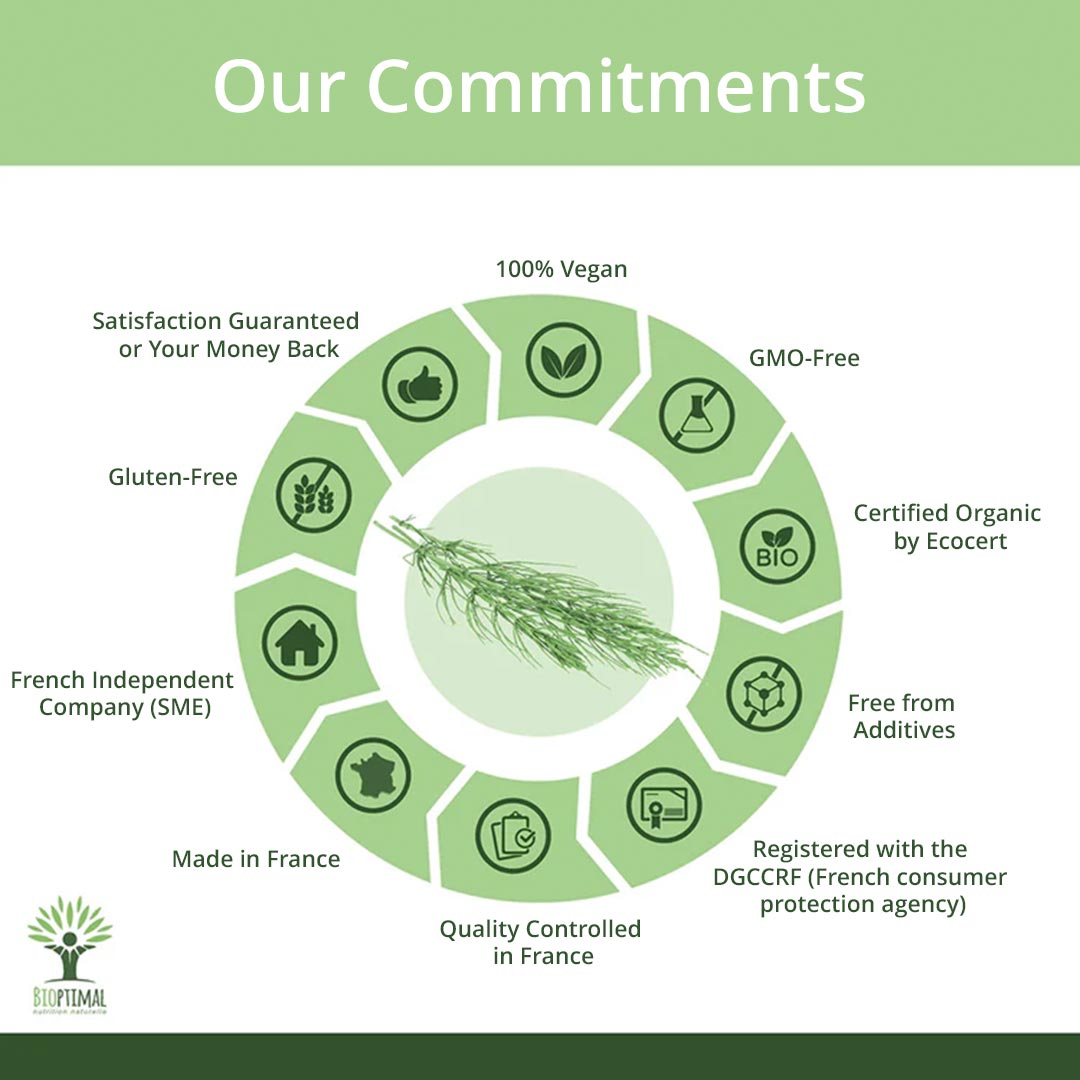
Our Bioptimal range brings together food supplements made in France, with a focus on carefully selected ingredients and straightforward formulations. Some feature a single botanical, while others combine plants or nutrients in formulas designed for a particular type of daily routine.

We look beyond the front of the pack. Ingredients, daily amounts, quality, certification, recommended use and precautions all matter when we decide what belongs at Elliotti.

Explore the product information above to understand exactly what is in this formula and how to use it.

Hi, I’m Susann!
I’m a holistic aromatherapist and naturopath, and I know that choosing between different botanicals and supplements is not always straightforward.
If you have questions about a product, its ingredients, how to use it or the differences between our botanical preparations, you’re always welcome to ask me. Personal guidance is part of the service at Elliotti, at no extra cost.

Send me an e-mail at susann@elliotti.com