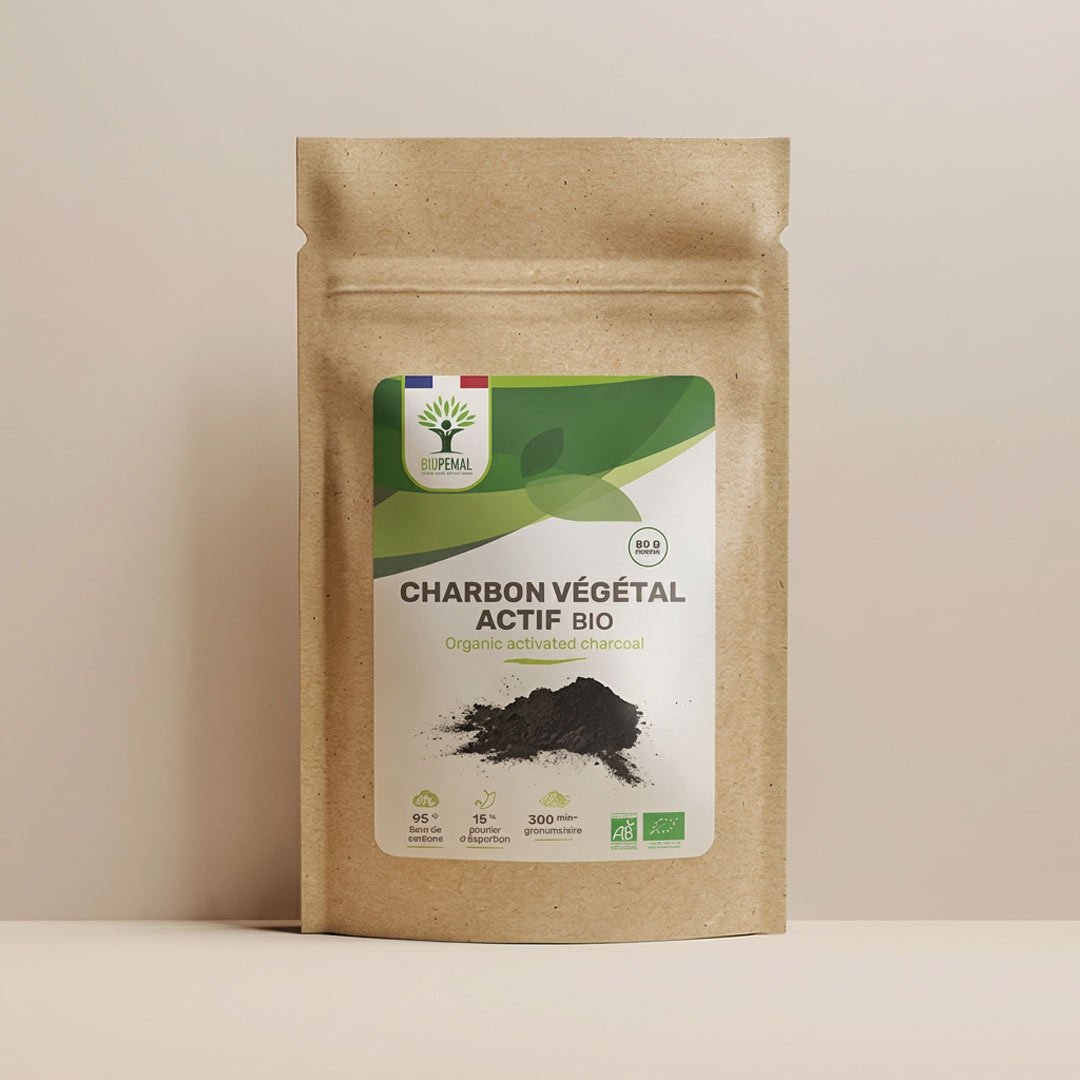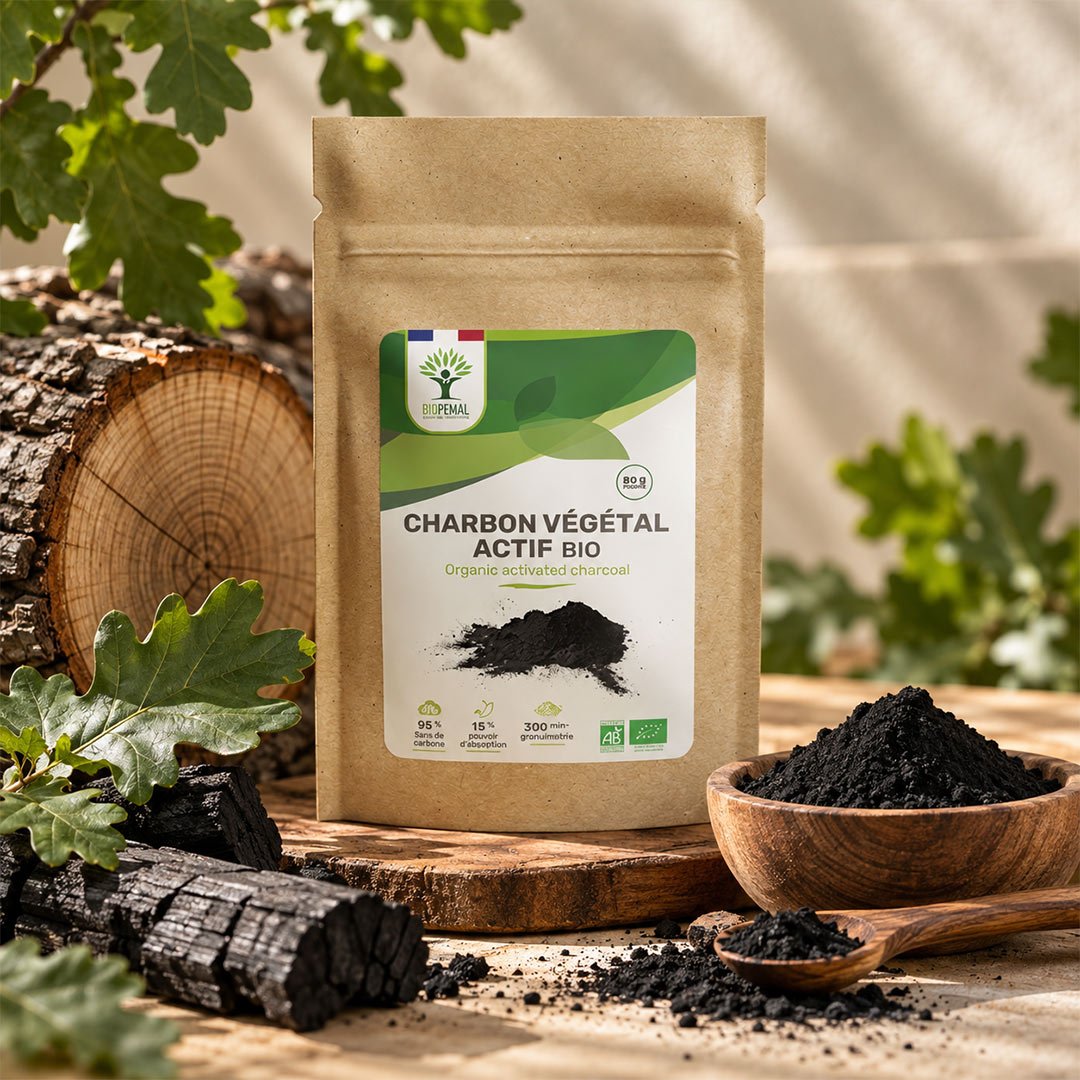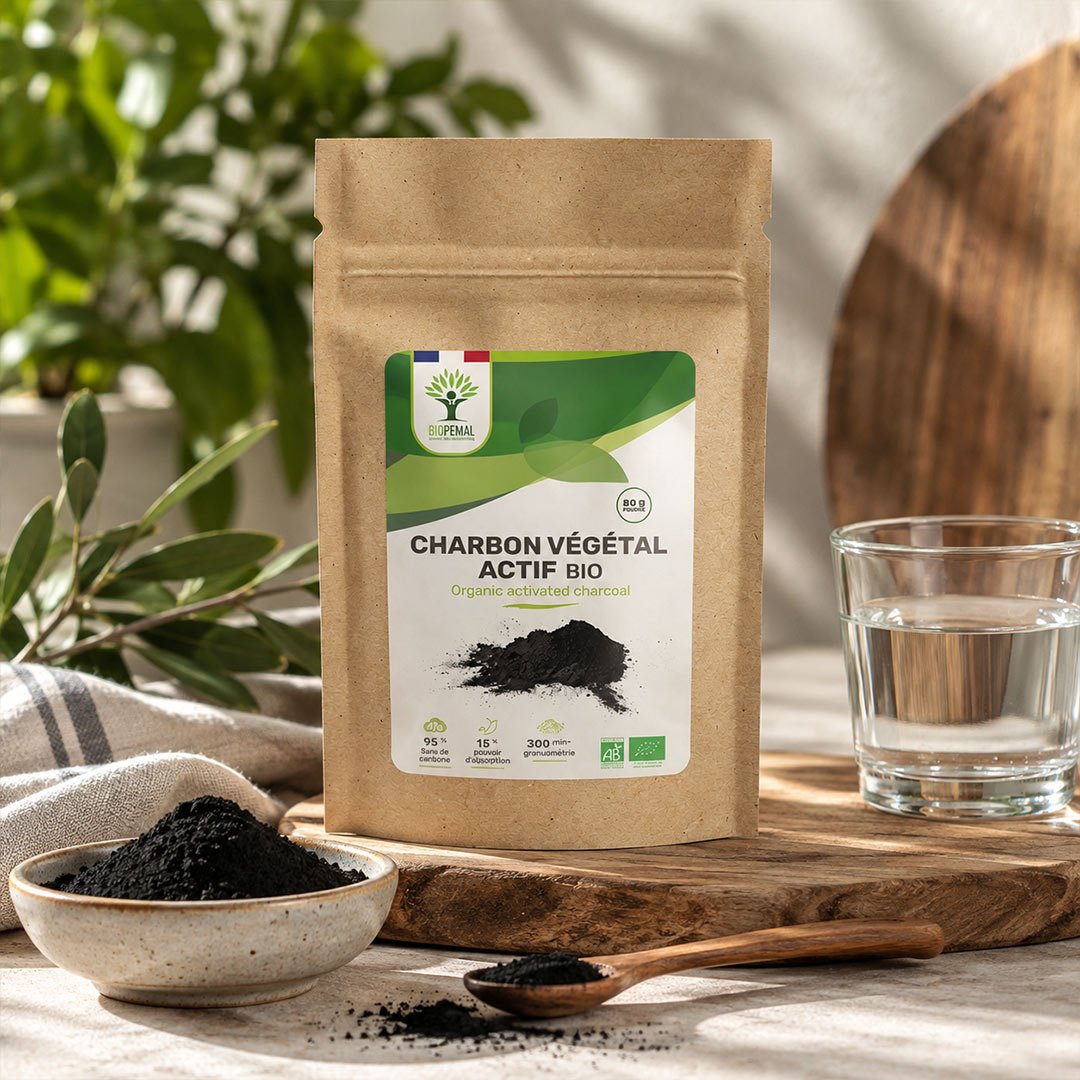
Organic Activated Charcoal Powder, 50g

Regular price € 13,90

BUY 3 GET 1 FOR FREE! (Add 4 to your cart)

Free Shipping
in Spain & Portugal
EU Shipping €6.90
Free from €59
Secure Payment
Safe & secure checkout

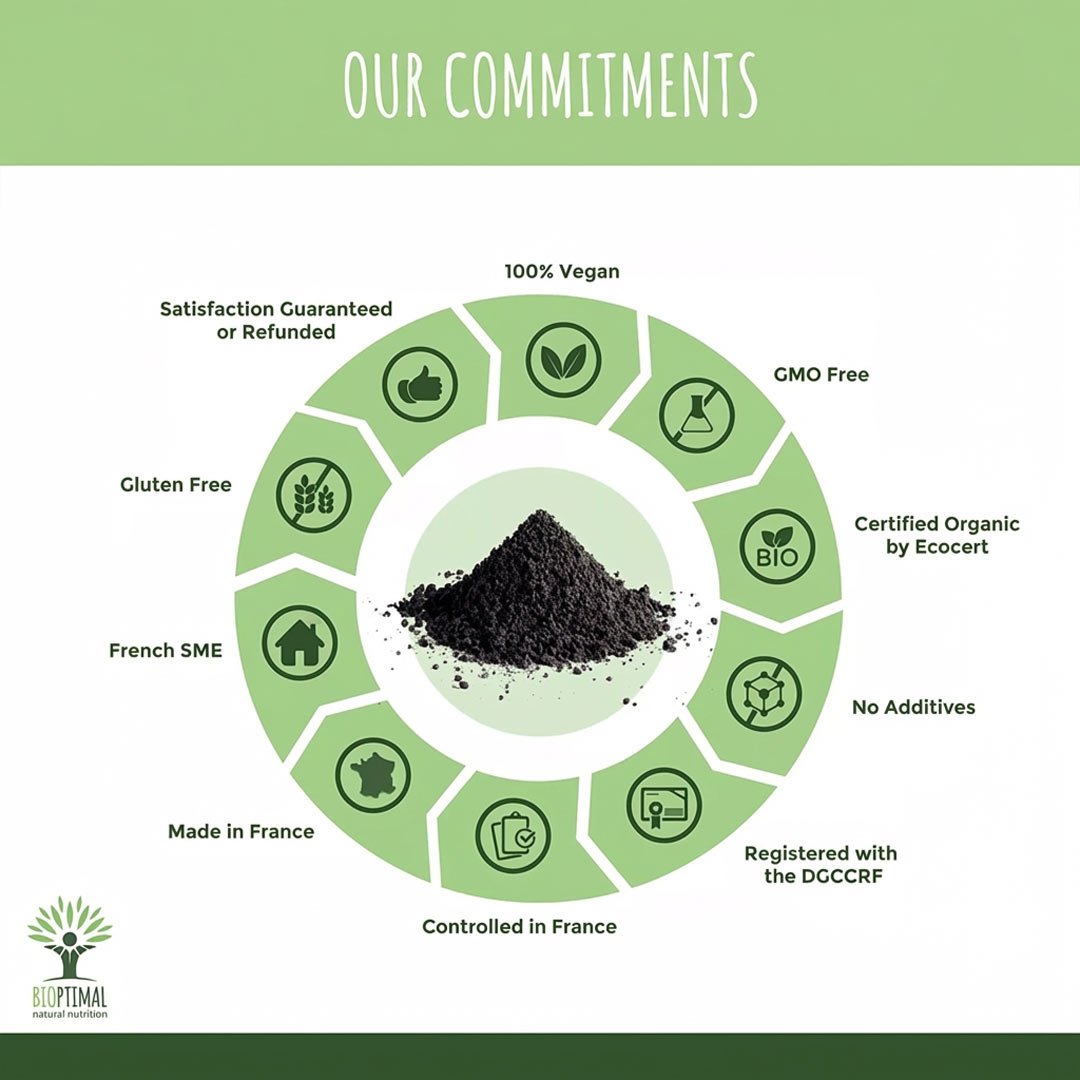
Organic Farming

Certified Organic

Vegan icon - Elliotti

Vegan

Gluten free icon - Elliotti

Gluten-free

Organic Activated Charcoal for After-Meal Comfort & More

Activated charcoal is one of those simple products that is surprisingly useful to have at home. This organic activated charcoal is particularly interesting for times when meals leave you feeling uncomfortably full of air or excessively gassy. Activated charcoal contributes to reducing excessive flatulence after eating when taken in the required amount before and after the meal.

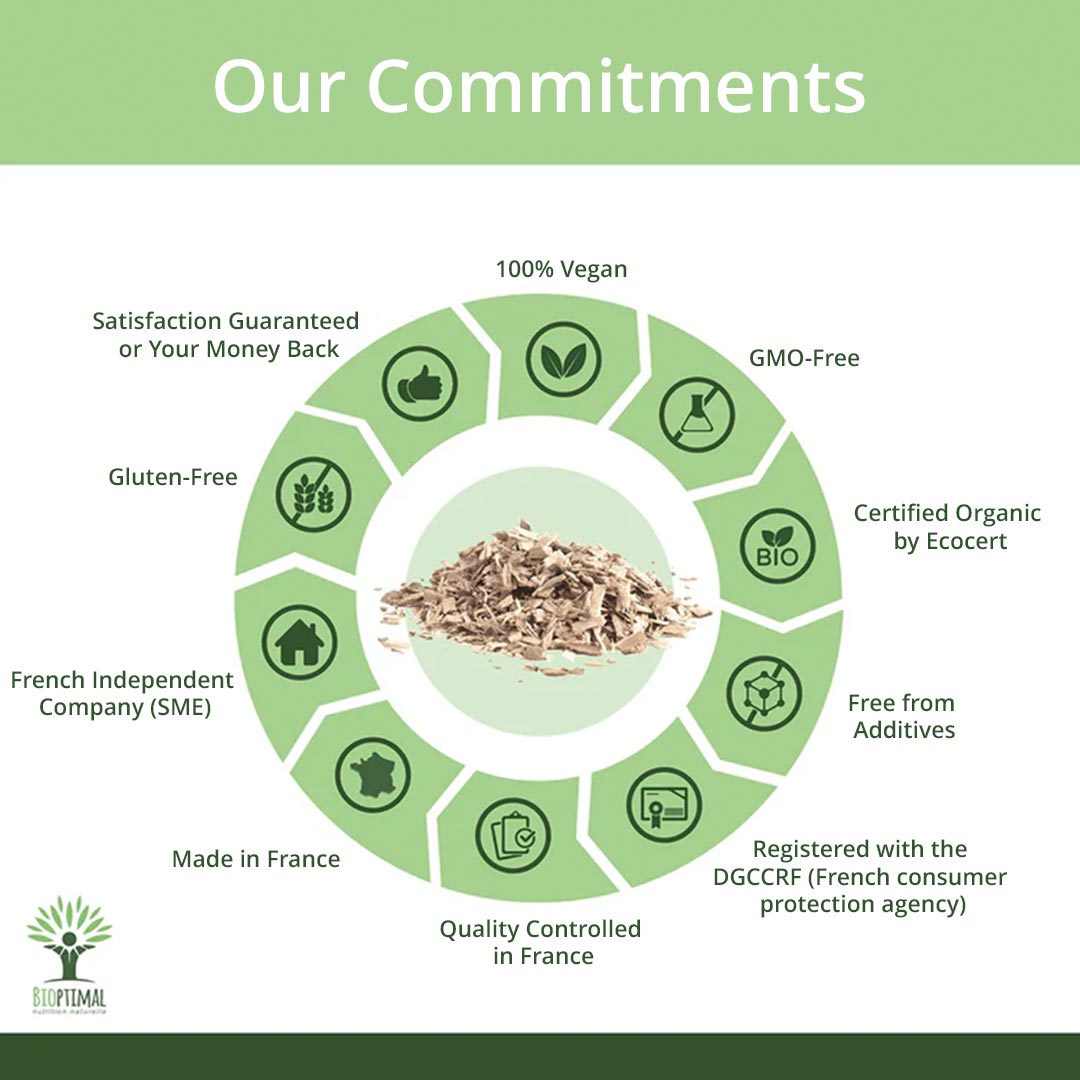
Made from wood sourced from sustainably managed French forests, the powder contains 100% activated vegetable charcoal (Carbo vegetabilis), with no added ingredients. Its highly porous structure gives activated charcoal its characteristic adsorbing capacity.

What makes this particular charcoal different is its 300 mesh particle size. Rather than being an ultra-fine powder, it has a slightly more noticeable, finely grainy texture. This makes it a versatile choice if you want activated charcoal not only as a food supplement, but also as an ingredient for homemade face masks, cleansing or exfoliating preparations, soaps and other rinse-off cosmetic recipes.

It can also be used to create naturally black food preparations, although its slightly coarser texture is better suited to recipes where an ultra-smooth finish is not essential.

A good choice if you want one simple, organic activated charcoal with several practical uses around the home: for your post-meal routine, DIY cosmetics and occasional culinary creations.

What Makes It Special

  • 100% organic activated vegetable charcoal
  • Made from wood from sustainably managed French forests
  • Made in France
  • 300 mesh powder with a slightly grainy texture
  • Particularly versatile for both ingestible and DIY cosmetic use
  • No added ingredients
  • 50 g powder format
More information

🌿What is activated charcoal?

Activated charcoal is a specially processed form of carbon made from plant material. Unlike ordinary charcoal, it undergoes an activation process that creates an enormous network of microscopic pores throughout the material. This gives it a very large internal surface area.

This porous structure is what makes activated charcoal so unusual. Substances can attach themselves to its surface through a process known as adsorption. Adsorption is different from absorption: rather than being soaked up into the material, molecules adhere to the many surfaces within the charcoal's porous structure.

🌿What does 300 mesh mean?

This version is milled and sieved to a controlled particle size of approximately 50–300 µm. It remains a fine powder, but with a slightly more noticeable texture than ultra-fine activated charcoal.

That texture makes this version particularly versatile. In addition to its intended ingestible use, its slightly more noticeable grain makes it interesting for homemade rinse-off cosmetic preparations, such as charcoal masks, scrubs and soaps.

🌿From wood to activated charcoal

This charcoal is produced from wood sourced from sustainably managed forests in France. The wood is first transformed into charcoal and then activated to develop the highly porous structure characteristic of activated carbon.

The finished powder consists of 100% activated vegetable charcoal, Carbo vegetabilis, without additional ingredients.

🌿A remarkably versatile material

Charcoal has been used by humans for thousands of years, but activated charcoal is a more specialised material. Its combination of an intensely black colour, porous structure and adaptable powder format has led to its use in many different fields, from food and technical applications to cosmetic formulations.

Usage tips

💚Intestinal Health
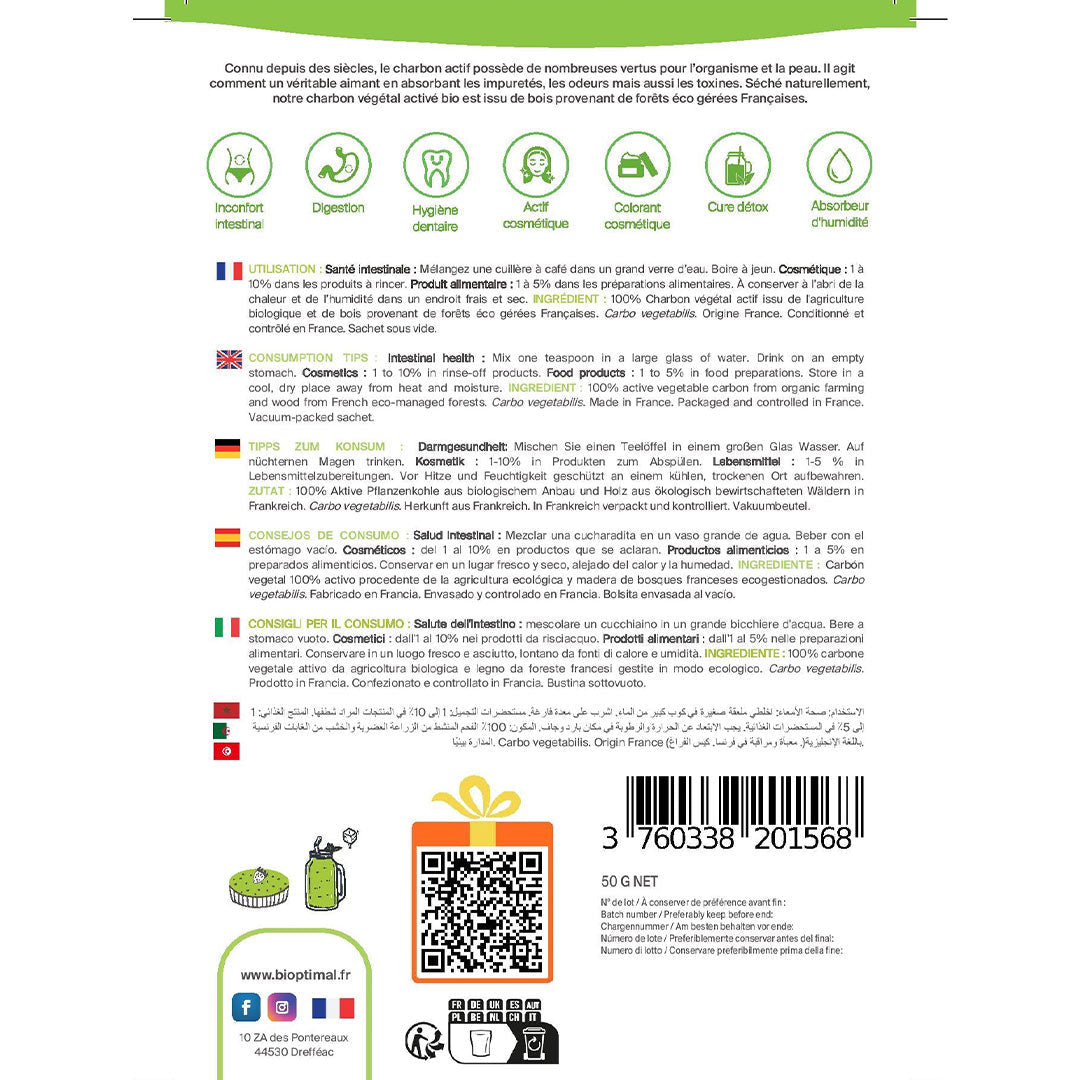
Mix 1 teaspoon of organic activated charcoal powder in a large glass of water.
Drink on an empty stomach.

💚Cosmetic Use (Rinse-Off Products)
Activated charcoal can be used in cosmetic formulations such as masks, cleansers, and soaps.

Recommended concentration: 1–10%

Suitable for rinse-off products only

💚Food Use (Natural Food Coloring)
Use as a natural colouring agent in food preparations.

Recommended concentration: 1–5% of the total recipe
Ideal for bakery products, pastries, pasta, and creative culinary recipes requiring a deep black colour.

💚Teeth Whitening (Occasional Use)
Activated charcoal is traditionally used in oral care routines to help remove surface stains from teeth.

- Lightly moisten your toothbrush
- Dip the bristles into a small amount of charcoal powder
- Brush gently for 1–2 minutes
- Rinse thoroughly with water

Use occasionally, not daily, to avoid excessive abrasion. The powder helps lift surface discolouration caused by coffee, tea, or food, supporting a brighter-looking smile.

Certification

Certified organic

Composition

100% Activated vegetable charcoal
From organic farming, produced from wood sourced from sustainably managed French forests.

Botanical name: Carbo vegetabilis

PURECOAL® is produced from oak and chestnut wood sourced from sustainably managed French forests. After natural drying and carbonisation, the charcoal is activated using only pressurised steam. This activation develops the microscopic porous structure responsible for activated charcoal's remarkable adsorbing capacity. No chemical activating agents are used in the process.

It takes approximately 5 kg of wood to produce 1 kg of finished activated charcoal.

A little history

The story of activated charcoal includes some surprisingly dramatic moments.

Scientists began studying charcoal more systematically in the 18th century. In 1773, Swedish chemist Carl Wilhelm Scheele demonstrated that charcoal could adsorb gases, and in 1785 the chemist Johann Tobias Lowitz showed its remarkable ability to remove colour and impurities from liquids. Charcoal soon found a practical role in purification, including in the sugar industry.

But one of the most extraordinary chapters came in 19th-century France. Researchers were investigating whether charcoal could bind poisonous substances. Historical accounts describe daring public experiments, including French pharmacist Pierre-Fleurus Touéry, who in 1831 demonstrated charcoal's adsorbing properties by taking charcoal together with what was reported to be an otherwise dangerous quantity of strychnine. He survived. Such experiments helped draw attention to charcoal's unusual ability to bind certain substances to its surface.

The charcoal used in these early experiments was not yet the modern activated charcoal we know today. That development came around the turn of the 20th century, when engineer Raphael von Ostrejko patented methods for dramatically increasing charcoal's adsorbing capacity. His work laid the foundations for modern chemical and physical activation, including activation using steam.

Activated charcoal then found its way into an extraordinary range of applications. It was used to purify and decolourise sugar, later became important in gas-mask filters during the First World War, and eventually became widely used in water purification, filtration and many other fields.

So behind this seemingly simple black powder lies more than two centuries of scientific curiosity. Its story stretches from early experiments in purification to daring 19th-century demonstrations and the development of the highly porous activated charcoal we use today.

Precautions for use

Activated charcoal may reduce the absorption of certain medicines. Allow at least 2 hours between taking activated charcoal and any medication. If you are taking medication regularly, consult your doctor or pharmacist before use.

Packaging & storage

Keep the original packaging tightly closed and store in a dry place at room temperature, protected from light and moisture.

Shelf life: 3 years when stored correctly.

FAQ

🌿 What is the difference between activated charcoal and ordinary charcoal?
Activated charcoal undergoes an additional activation process that creates a vast network of microscopic pores. This gives it an exceptionally large surface area and its characteristic adsorbing capacity. Ordinary barbecue charcoal is not the same product and should never be used as a substitute.

🌿 Why would I take activated charcoal after a meal?
Activated charcoal has an authorised EU health claim for reducing excessive flatulence after eating. For the beneficial effect, 1 g should be taken at least 30 minutes before the meal and 1 g shortly after the meal.

🌿 Does activated charcoal help with bloating too?
The authorised EU claim specifically concerns excessive flatulence after eating, rather than bloating or digestion in general. This is why we prefer to be precise about what activated charcoal is recognised for rather than describing it as a general digestive supplement.

🌿 What does 300 mesh mean, and why does it matter?
It describes the particle size of the powder. This 300 mesh charcoal is fine, but has a slightly more noticeable texture than ultra-fine activated charcoal. That makes it particularly versatile if you also enjoy making homemade rinse-off cosmetics, such as charcoal masks, scrubs and soaps.

🌿 Can I use the same charcoal powder for DIY skincare?
Yes. One of the interesting things about this particular powder is its versatility. Its 300 mesh texture makes it suitable as an ingredient in homemade rinse-off cosmetic preparations. Because charcoal is intensely black, start with a small amount when experimenting with your own formulations.

🌿 Can activated charcoal affect medicines or supplements?
Yes, and this is important. Because activated charcoal can adsorb substances onto its surface, it may also interfere with the absorption of medicines and other supplements taken around the same time. They should therefore not be taken together. If you use medication, particularly essential prescription medication, ask a pharmacist or healthcare professional about appropriate spacing before using activated charcoal.

Volume

50g

Botanical Supplements, Chosen with Care

At Elliotti, we believe a good supplement should be easy to understand. What is in it, how much should you take, where does it come from, and why has this particular formula been chosen?

Our Bioptimal range brings together food supplements made in France, with a focus on carefully selected ingredients and straightforward formulations. Some feature a single botanical, while others combine plants or nutrients in formulas designed for a particular type of daily routine.

We look beyond the front of the pack. Ingredients, daily amounts, quality, certification, recommended use and precautions all matter when we decide what belongs at Elliotti.

Explore the product information above to understand exactly what is in this formula and how to use it.

Hi, I’m Susann!

I’m a holistic aromatherapist and naturopath, and I know that choosing between different botanicals and supplements is not always straightforward.
If you have questions about a product, its ingredients, how to use it or the differences between our botanical preparations, you’re always welcome to ask me. Personal guidance is part of the service at Elliotti, at no extra cost.

Send me an e-mail at susann@elliotti.com