Agrimony Organic Infusion, 60g

Regular price € 13,90

BUY 3 GET 1 FOR FREE! (Add 4 to your cart)

Free Shipping
in Spain & Portugal
EU Shipping €6.90
Free from €59
Secure Payment
Safe & secure checkout

Organic Farming

Certified Organic

Vegan icon - Elliotti

Vegan

Gluten free icon - Elliotti

Gluten-free

A Traditional European Herb for Digestion, Mouth & Throat

Agrimony (Agrimonia eupatoria) is a traditional European herb with a long history of use for the mouth, throat and digestion. Made from the flowering aerial parts of the plant, it offers a simple way to discover an old herbalist favourite as a single-herb infusion.

Agrimony is particularly known for its naturally astringent character, which comes largely from its tannins. This gives the infusion a mildly bitter, herbaceous taste with a slightly dry sensation in the mouth, one of the qualities that distinguishes agrimony from softer, sweeter herbs such as chamomile.

Traditionally, agrimony has been prepared as an herbal infusion around digestion, as well as cooled and used as a gargle or mouth rinse for the mouth and throat. This makes it an interesting herb to keep at home if you enjoy using individual plants according to their traditional purpose rather than simply choosing tea for flavour.

Made from 100% organically grown agrimony, with no other herbs, flavourings or preservatives added. Simply prepare the flowering aerial parts as an infusion and enjoy the characteristic taste of this classic European herb.

60 g provides approximately 20 daily preparations at the recommended amount of 3 g per day.

More information

Botanical name: Agrimonia eupatoria L.
Plant family: Rosaceae (Rose family)
Plant part used: Flowering aerial parts
Cultivation: Organic
Preparation: Herbal infusion

🌿What makes Agrimony interesting?

Agrimony has a distinctive combination of bitter and astringent qualities, two characteristics that are often confused but are actually quite different.

Bitterness is a taste. When bitter plant compounds reach the tongue, they activate specialised bitter taste receptors. These receptors are part of the reason bitter herbs have traditionally held such an important place around food and digestion in European herbalism.

Astringency is a sensation rather than a taste. It is the slightly dry, tightening feeling you may recognise from strong black tea or red wine. Agrimony naturally contains tannins, plant compounds that interact with proteins in saliva and create this characteristic sensation.

So when you drink agrimony, the mildly bitter taste and the dry, astringent sensation are coming from different aspects of the plant. This combination is part of what gives agrimony its distinctive identity among traditional European herbs.

🌿Why are bitter plants associated with mealtimes?

There is physiology behind the traditional interest in bitter herbs.

The bitter receptors that allow us to taste bitterness are not found only on the tongue. Bitter-sensing receptors have also been identified throughout the digestive system, where they are involved in signalling connected with the body's response to food.

This has made bitter plants particularly interesting to herbalists for generations and helps explain why bitters became such an established part of European herbal traditions around meals.

It does not mean that every bitter plant works in exactly the same way. Different plants contain different bitter and astringent compounds, which is one reason herbalists distinguish between individual herbs rather than treating all bitter plants as interchangeable.

🌿The flowering aerial parts

For this infusion, it is the flowering aerial parts of Agrimonia eupatoria that are used. Rather than using a concentrated extract, you prepare the plant itself in hot water, which is one of the traditional ways European herbs have been enjoyed and explored.

Agrimony belongs to the Rosaceae, the same large botanical family that includes familiar plants such as roses, apples and strawberries. Despite this family connection, agrimony has a very different character, with its own distinctive flowering tops and herbal profile.

Usage tips

Use 3 teaspoons (approximately 3 g) per day.

Add the agrimony to 150–250 ml of boiling drinking water. Leave to infuse for 5–10 minutes, then strain before drinking.

Agrimony has a naturally herbal, mildly bitter and astringent character. If you are new to the plant, try it first on its own so you can become familiar with its distinctive taste.

The infusion can also be prepared in the same way and left to cool before use as a traditional mouth rinse or gargle.

For a softer flavour: combine agrimony with chamomile or lemon balm. For a fresher herbal infusion, try it with peppermint.

Certification

Certified Organic
Country of Origin: Poland
Country of manufacture: Poland

Composition

100% Organic Agrimony (Agrimonia eupatoria L.)
Flowering aerial parts.

No added ingredients.

A little history

Agrimony (Agrimonia eupatoria) has been part of European herbal traditions for more than 2,000 years, with references reaching back to the ancient Greeks and Romans.

The plant appears in the writings attributed to Dioscorides in the 1st century AD, and over the centuries it developed a reputation as a valued medicinal herb. By the Middle Ages, agrimony had found a place in European monastery gardens and folk medicine, where the flowering herb was gathered for both internal and external preparations.

One particularly important chapter in its history was its reputation as a wound herb. Preparations of agrimony were traditionally applied externally to the skin, while infusions of the plant became associated with digestive complaints, weakness and convalescence.

Agrimony also found its way into European folklore. It was regarded in some traditions as a protective herb, and later herbal traditions associated it with people who concealed worries or inner tension behind a cheerful exterior. This idea survives today in the Bach flower tradition, where Agrimony has a very particular symbolic identity.

Even its botanical name carries history. The species name eupatoria has traditionally been associated with Mithridates VI Eupator, King of Pontus, a ruler remembered for his fascination with medicinal plants, poisons and antidotes.

From ancient herbals and medieval monastery gardens to the modern herbal cupboard, agrimony has had an unusually long journey for such an unassuming little yellow-flowered plant.

Precautions for use

If you are taking medication, particularly anticoagulants, or if you are pregnant, breastfeeding or have a medical condition, seek advice from a healthcare professional before use.

Packaging & storage

Store in a cool, dry place away from direct sunlight and moisture. After opening, keep the agrimony in its original packaging if it can be securely closed, or transfer it to a clean, airtight container. Keep away from heat, humidity and strong odours to help preserve the herb's aroma and quality.

Herbal infusions are sensitive to light, air, and moisture. Proper storage helps preserve the herb’s aroma, potency, and active constituents.

FAQ

🌿 Is agrimony the same as agrimony extract or tincture?
No. This product contains the flowering aerial parts of the actual plant, intended to be infused in hot water. Extracts and tinctures are prepared differently and may contain more concentrated amounts of particular plant constituents.

🌿 Can I drink agrimony every day?
The product is intended for daily preparation at 3 g per day. As with other individual herbs, it can also be used as part of a varied herbal tea routine rather than drinking the same plant continuously.

🌿 Why is agrimony traditionally used as a gargle?
Agrimony has a long tradition of use as a gargle for a sore or irritated throat, and as a mouth rinse for the mouth and gums. Its naturally tannin-rich, astringent character is one of the reasons the herb became associated with this traditional use. Prepare the infusion as usual, strain it and allow it to cool to a comfortable temperature before gargling or rinsing.

🌿 Why does agrimony have tiny hooks on its fruits?
After flowering, agrimony develops small fruits covered with hook-like bristles. These catch easily on animal fur and clothing, allowing the seeds to travel away from the parent plant. It is agrimony's natural way of hitching a ride to a new growing place.

🌿 Is agrimony related to roses?
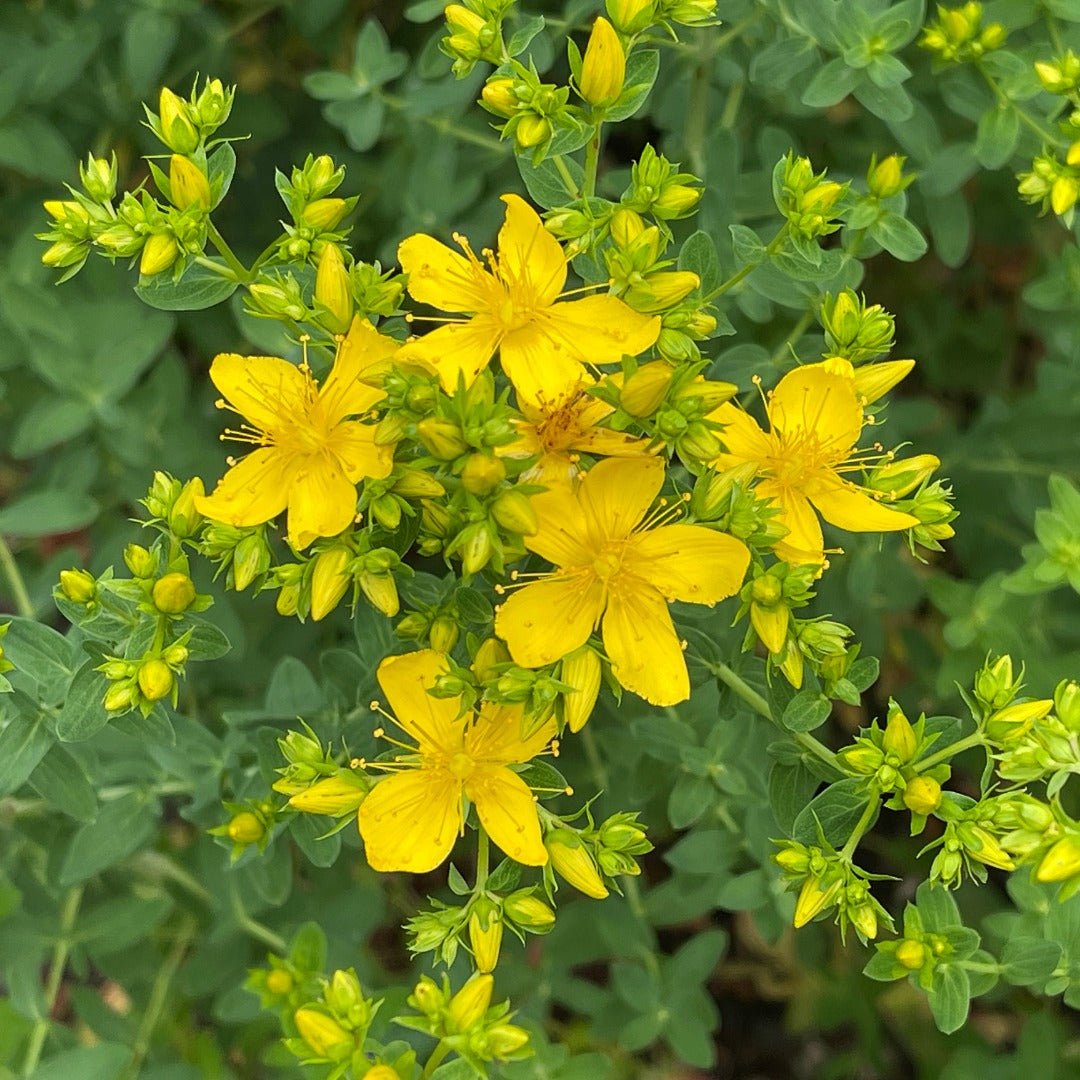
Yes. Surprisingly, agrimony belongs to the Rosaceae, or rose family, alongside roses, apples, pears, strawberries and raspberries. It may look very different from these familiar plants, but botanically they are relatives. Agrimony's small yellow flowers also show the characteristic five-petalled structure seen in many members of the rose family.

🌿 Where does this agrimony come from and how is it controlled?
The agrimony is grown in Poland and certified organic under EU organic standards. After harvesting and drying, it is packaged and inspected in France according to defined quality specifications. The product is certified organic FR-BIO-01 (EU Agriculture), providing clear traceability from the raw plant material to the finished product.

Volume

60g

Botanical Supplements, Chosen with Care

At Elliotti, we believe a good supplement should be easy to understand. What is in it, how much should you take, where does it come from, and why has this particular formula been chosen?

Our Bioptimal range brings together food supplements made in France, with a focus on carefully selected ingredients and straightforward formulations. Some feature a single botanical, while others combine plants or nutrients in formulas designed for a particular type of daily routine.

We look beyond the front of the pack. Ingredients, daily amounts, quality, certification, recommended use and precautions all matter when we decide what belongs at Elliotti.

Explore the product information above to understand exactly what is in this formula and how to use it.

Hi, I’m Susann!
I’m a holistic aromatherapist and naturopath, and I know that choosing between different botanicals and supplements is not always straightforward.
If you have questions about a product, its ingredients, how to use it or the differences between our botanical preparations, you’re always welcome to ask me. Personal guidance is part of the service at Elliotti, at no extra cost.

Send me an e-mail at susann@elliotti.com